
23 Jun 2026
Take five with Rachael Walthew, Civil Engineering Technician (Water) at WSP. Find out how she's figuring out "the juggle" of career progress and her young family, the difference she believes a supportive workplace can make – and how a quick reminder of what's to come helps her through a tough day.
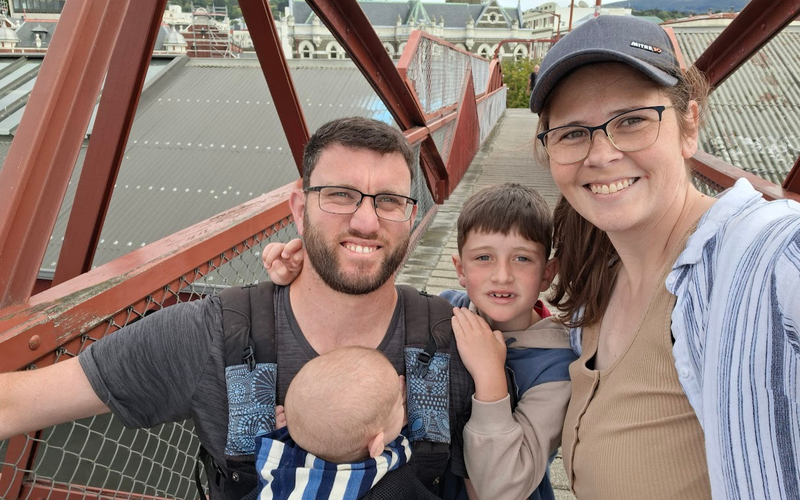
Rachael Walthew and her family. Photo: supplied
I'm a mum, and a civil engineer, and the two can absolutely coexist.
Name: Rachael Walthew
Role: Civil Engineering Technician – Water
Organisation: WSP
Location: Ngāmotu New Plymouth
Favourite chip flavour: Hot chips from the dairy, with chicken salt
What first sparked your interest in engineering?
Engineering wasn't something I had ever considered growing up, and my pathway into the profession was anything but traditional.
By the time I discovered engineering, I had already studied performing arts and business management and worked across retail, hospitality, early childhood education, administration and banking. It wasn't until after having my first son that I started asking myself a different question: if I could start again, what would I choose?
I was approaching 30, at home with a one-year-old, and unsure whether I saw myself returning to any of the careers I had previously held. It felt like a season of reflection and possibility.
What kept drawing me back was problem solving. I've always enjoyed figuring things out, finding solutions that aren't immediately obvious, and learning how things work. The more I looked into engineering, the more I realised that at its core, engineering is exactly that, solving problems and creating solutions.
When I first looked into studying engineering in 2020, I was told I didn't meet the prerequisites because I hadn't studied maths or science since Year 11. Fortunately, I was granted an exemption and enrolled in my first paper.
I remember thinking, "What's the worst that could happen?" If I failed one paper, I'd have my answer and move on. But there was another possibility: what if I had landed exactly where I was meant to be?
So I followed the "what if".
Looking back, that decision changed the course of my life. Engineering wasn't something I had always dreamed of, but it turned out to be exactly the right fit.
What motivates you on a tough day?
When things feel difficult, I try to remind myself that one day they won't feel this hard.
I think back to early 2020 when I was attempting to build my son a timber climbing frame. I didn't own a protractor, so I printed one from the internet and glued it onto some cardboard. I was trying to make an equilateral triangle and somehow ended up with a 90-degree angle at the top. Thankfully my son didn't mind and used it for climbing anyway.
At the time, all of that felt hard. Now those maths concepts are second nature.
I've seen that pattern enough times to trust it, things that feel difficult now usually don’t stay difficult forever. Progress isn't always fast or predictable, but it does happen.
So on a tough day, I remind myself that I'm probably just in the middle of learning something new.
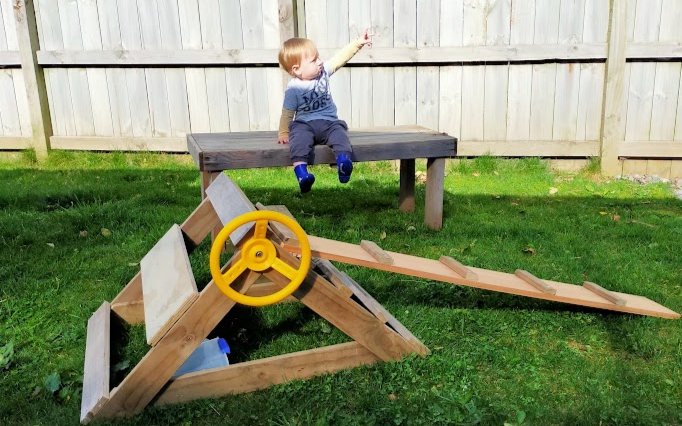
Inspired by mum's DIY skill. Photo: supplied
You said: "I'm a mum, AND I'm a civil engineer, and the two can absolutely coexist." Tell us about your journey and how you balance motherhood and a successful career.
I’ve recently returned to work after my second child, and I’m still right in the middle of figuring out the juggle. Being a mum and a civil engineer absolutely coexists for me, but it’s not always seamless.
While I was on maternity leave, I also completed my BEng (Tech) and graduated, so coming back has felt like a bit of a “level up” moment professionally as well.
What’s made the difference has been the support from my workplace. Both my line manager and workgroup manager have been genuinely flexible; they supported me in starting back on reduced hours and gradually increasing back to my pre-maternity leave hours. I’ve also had regular check ins to see if I need anything, along with full support to continue breastfeeding, including access to a space to pump when I am in the office.
Importantly, I haven’t felt held back because I’m a mum. I’m still finding my balance, but I feel reassured I don’t have to have it all figured out yet, and that both these parts of my life can absolutely sit alongside each other.
What's the biggest lesson you've learned so far?
Don't underestimate what can happen when you start before you feel ready.
If I had waited until I felt confident enough to study engineering, I probably never would have started. I just took one step, then the next.
I’ve realised growth usually happens in the uncomfortable moments, and the things that challenge us now often become second nature later.
The phrase I come back to is: “Follow the what if.” Because honestly, most things are figure-out-able.
What's a common misconception about engineering that you'd like to correct?
That you have to be a maths genius who has known since childhood that engineering is what you wanted to do.
Engineering needs people with diverse backgrounds, experiences and ways of thinking. Technical skills are important, but curiosity, communication and persistence are equally valuable.
I hadn't studied maths or science since I was 15, and my career path before engineering included performing arts, education, administration and banking. Those experiences didn't hold me back; they strengthened my ability to connect with people and approach problems from different perspectives.
Engineering also benefits from diversity of thought. Teams are stronger when they include people who think differently and bring varied life experiences to the table.
What's something we'd be surprised to learn about you?
Something people are usually surprised by is just how different 2025 looked compared to what I thought it would be. At the end of 2024, my plan was simple: finish my engineering degree and continue to work.
In reality, 2025 turned into something very different. I somehow balanced work and my final year of study, we hosted an exchange student from Germany for eight and a half months. Then, in September we welcomed our second child while I was still finishing the semester.
It definitely wasn’t what I expected the year to look like, and I am not quite sure how it all happened at once…
Looking back, it was a huge year, but a great reminder that life rarely goes exactly the way you think it will.
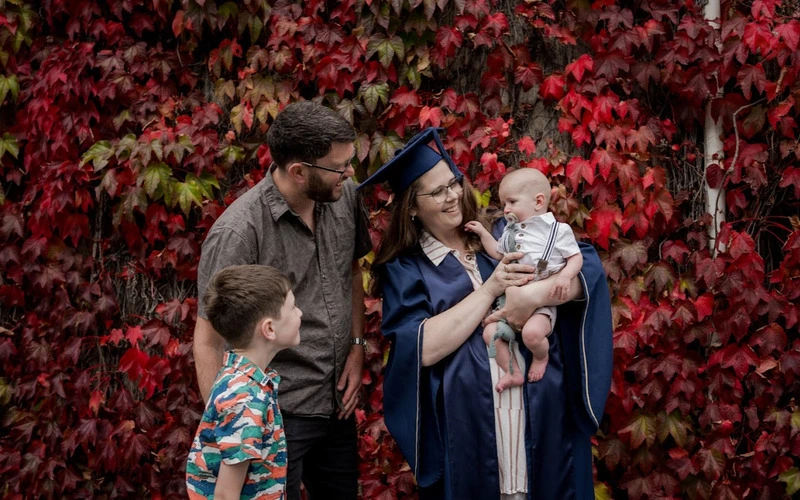
2025 was a big year for Rachael. Photo: Dony Joseph Photography
What would 10-year-old Rachael think about your current job?
She'd probably ask, "… you're a what?"
At 10 years old I don't think I knew what an engineer was, let alone imagined I'd become one. I was far more likely to picture myself on a stage than working on infrastructure projects.
But I think she'd recognise the curiosity. I've always loved learning new things, following random interests and seeing where they lead. That's been the constant through every study choice, career change and opportunity I've taken.
Engineering wasn't part of the plan, but neither was most of the path that got me here.
What would you say to fellow wāhine engineers, and to young women and girls considering a career in engineering?
Don't let the fact that you can't see the whole path stop you from taking the first step.
You don't need to have all the answers, fit a particular mould, or to follow a traditional pathway. Some of the best engineering solutions come from people who are willing to ask questions, challenge assumptions and see the problems differently.
I'd also encourage women not to be afraid to question the status quo. Things rarely improve by doing what has always been done.
I'm proud to be part of a generation where seeing women in engineering is becoming more normal and I'm excited for the generations that follow.
If you're curious, willing to learn and prepared to give something a go, don't count yourself out. Sometimes the most exciting opportunities start with asking, "what if?"
How do you unwind from work?
I don't sit still particularly well, so "unwinding" usually involves making, cooking or building something.
I love baking and cooking, and I have what some might describe as an excessive collection of kitchen gadgets. My collection of power tools probably isn’t far behind.
It’s just how I switch off, getting absorbed in something practical where I can figure things out as I go. Sometimes that’s a new recipe, sometimes it’s a project around the house or something I’ve decided that can definitely be improved.
One of the more successful examples was turning an old deck and a box of screws into a 15-metre fence for under $60.
For me, it’s less about “relaxing” in the traditional sense and more about doing something hands-on where my brain can reset by focusing on something tangible.