

15 Jul 2026
Wasiq Kashkari describes his early career as “a lot of jumping around companies and sectors” learning what good – and not so good – engineering teams looked like and prioritised. He then worked at Pushpay, helping to scale their app product from acquisition to a rapidly growing business.
After a brief stint in the German start-up scene, he returned to Aotearoa to work in education, in time becoming Chief Technology Officer at study platform Revision Village. Last year Wasiq and his wife started Coach Squad, a booking system offering coaching from professional athletes and experienced coaches. He says it has been rewarding growing something from zero to a thriving platform with 140 coaches, alongside his wife. “Sharing both a home and work life with someone I admire and love so much has honestly been the highlight of my career.”
What attributes make you a good leader?
I’m not sure I do an amazing job at this, but I make a point to ensure I know where my team members want to go in their careers and do my best to help enable that. I also think it’s important to prioritise empathy and shared ownership, working alongside a team rather than having them work for you and learning from mistakes without blame.
At the end of each day, what tells you whether you’ve been successful?
Day-to-day success in software can be hard to measure, so I tend to focus on success over longer time ranges. Over weeks and months it’s about measuring progress towards your objectives. The best signals though are over years: if you can measure your velocity over time and ensure it’s high while keeping a healthy, resilient team, you’re doing very well.
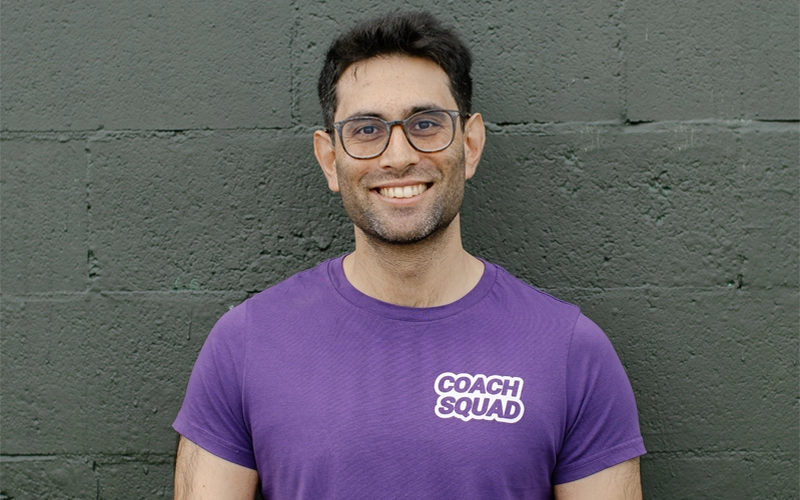
Photo: supplied
What inspired you to become an engineer?
As a kid, I loved F1 and wanted to become a mechanical engineer. However, after a semester, I quickly realised I did not enjoy what I was studying. I was floundering around a bit, not really knowing what to do and took a software engineering paper. Things just clicked into place. Solving software problems felt like putting puzzle pieces together in my head. I could see the goal and I needed to figure out the best way to get there. I was hooked.
Who opened a key door for you?
Alex Henderson from Pushpay. He was by far the most respected engineer at the company and he believed in me. Seeing his confidence in my ability unlocked something in myself (confidence?) and helped me understand that I could do hard things.
How do you connect your work with a sense of greater good?
We get such amazing feedback from both students and teachers that it’s not hard to feel like you’re doing something worthwhile. In a period where technology is completely breaking a lot of tried and tested education techniques, building tools that allow teachers and students to do the things that really matter (such as 1–1 teaching) rather than marking or generating exams is a great feeling.
What mistake have you learned the most from?
At Pushpay, while I can’t remember what the actual mistake was, I do remember the rigorous post-mortem that followed. This taught me about the importance of focusing on small improvements rather than blaming yourself.
How do you approach a difficult conversation with someone you lead?
With empathy and a clear outcome in mind. Understand what the other person is going through at the time
and gently guide them to the outcome as best as you can.
Who is a leader in New Zealand you admire and why?
Julian Spora, my first manager at Pushpay, taught me about good leadership. He was always there to support the team and I trusted him with my career.
What questions have you been asking yourself lately?
A few years ago, if you didn’t understand a fundamental concept from a previous year at school, this would jump out at teachers straight away. I ask myself how we can identify these issues in a world where you can use AI to effectively hide these gaps for years.
This article was first published in the June 2026 issue of EG magazine.