
26 Jun 2026
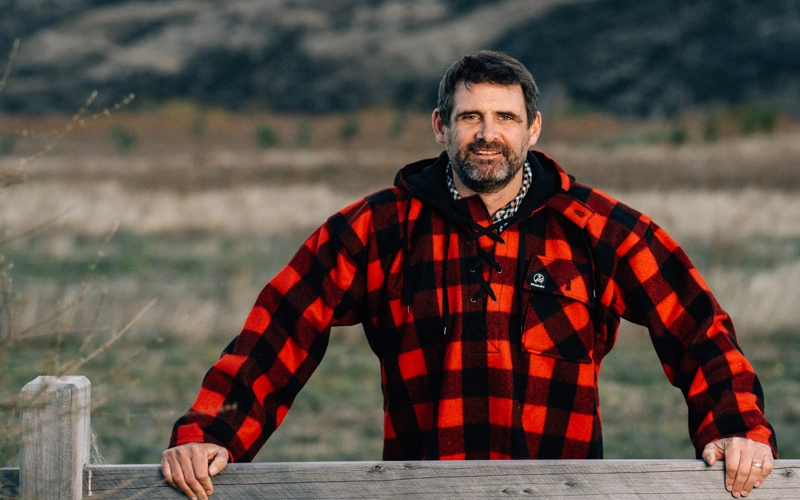
As oil prices continue to rise amidst global uncertainty, Mike Casey’s focus on cleaner, more sustainable energy provides a stark contrast. Trained as a software engineer, he was recently named Sustainability Leader at Kiwibank New Zealander of the Year Awards for his work with clean energy.
An entrepreneur and cherry orchardist, Mike has electrified all the machines on his farm and demonstrated how the transition away from diesel can save farmers tens of thousands each year and significantly reduce emissions. He’s also the CEO of Rewiring Aotearoa, a charity dedicated to electrifying millions of fossil fuel machines across the motu as quickly as possible.
What’s on your bedside table?
When I was learning to grow cherries, I had to take in lots of different information from lots of different places, so there would always be a horticultural book. Learning about energy has been the same. Now I’m more focused on learning about leadership and developing culture within an organisation. To be honest, my phone is usually on the bedside table and I prefer listening to podcasts and audio books.
How have these learnings helped your work?
I have learned so much in the past five or six years. Some of that is by reading and listening, but a lot of it was by doing. I have regular sessions with a CEO coach who recommended some “bibliotherapy”. I recently read Viktor Frankl’s Man’s Search for Meaning, which was inspiring and harrowing in equal measure. Ivan Cleary’s Not Everything Counts But Everything Matters was a solid lesson in leadership from a famed coach. Patagonia founder Yves Chouinard’s book Let My People Go Surfing didn’t grab me, but is still a good example of finding a purpose. I spend a lot of time keeping up with other experts in the energy space through podcasts or online content. For example Electrify This with Sarah Aubrey, Frackman Project, Chris Nelder’s The Energy Transition Show, David Roberts’ Volts, and Everything Electric with Robert Llewellyn.
What is the top book you’d recommend to others?
Dr Saul Griffith’s The Big Switch explains in fairly simple and engaging terms the role that electrification can play when it comes to climate change and cost-of-living relief. He argues that around three-quarters of the world’s emissions come from burning fossil fuels. Machines – big and small – use those fuels. If we want to solve climate change and save households, communities and countries money, we need to electrify the machines. That’s what I’ve done on my all-electric orchard near Cromwell and I know it works.
What book has most shaped your career?
I guess you could say the textbooks for my software engineering degree had the biggest impact. That degree led to me co-creating a platform called GradConnection in Australia that linked university graduates to employers and was eventually bought by SEEK.
Reinventing Organisations by Frederic Laloux had a big impact on me more recently. Rewiring Aotearoa is like one of the “teal” organisations mentioned in the book, with a lot of autonomy, purpose, direction and vision. An “orange” organisation is one where everyone is too afraid to try anything, so innovation and agility never really even make it out of bed. We see a lot of that in the energy sector and in government.
Do you read for fun?
I mostly do exercise for fun, and Coast to Coast and Ironman have been flailing efforts to stave off the ravages of time. But as someone advocating for more efficient electric machines, I do like to increase my own efficiency and do two things at once, so I’ll often pop in a podcast or audio book when I’m on the bike or electric mower. I’ve also been on a mission to reconnect with my iwi and I’m in my second year at Te Wānanga o Aotearoa learning te reo Māori part time.
SPEED READ
Audio book/paper copy
Borrow/own
Expensive imported fuel/New Zealand-made electrons [Mike's edits!]
This article was first published in the June 2026 issue of EG magazine.