
21 Jul 2026
Why pioneering acoustic findings continue to resonate.
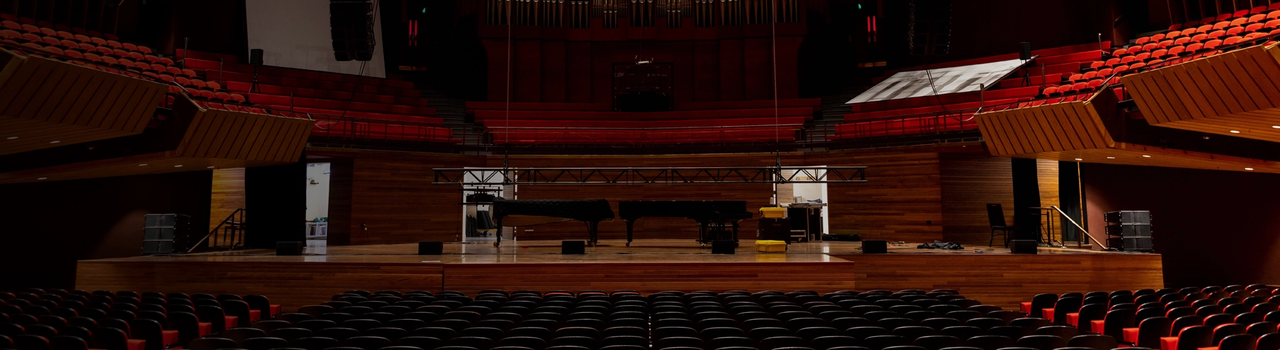
The Wellington Town Hall first opened its doors to a music loving public in 1904. Earthquake strengthening and refurbishment of the building is nearing completion, and next year audiences will again be able to experience the main auditorium’s beautiful acoustics. The auditorium follows the classic shoebox shape, established in the 19th century as an optimal design for concert halls, resulting in a rich, resonant sound. The restoration work has paid careful attention to retaining the auditorium’s dimensions and as much of the heritage fabric as possible, allowing audiences to have the same musical experience as they did 100 years ago.
Since the Town Hall opened, our understanding of acoustic design has grown immensely. We now understand why the shoebox design works so well, and how to make other concert hall designs work acoustically too. It was New Zealander Sir Harold Marshall’s discovery of the importance of lateral sound that changed how we approach concert hall design.
In the 1960s acoustical engineering was a very new discipline in New Zealand. In 1965, Christchurch City Council began plans to build a new town hall and concert venue. They called for architectural designs by competition and appointed Harold Marshall to the assessment panel as acoustic consultant. He had degrees in architecture and physics and in 1960 had been appointed Senior Lecturer in Acoustics at the University of Auckland. In 1965, at 33 years old, he’d never designed a performance space and was starting his doctoral research in acoustics at the Institute of Sound and Vibration Research at Southampton University in the United Kingdom. He received the five finalist architectural designs, along with a deadline to provide reports on their predicted acoustic performance. None were of the tried and tested shoebox shape. A new theory suggested initial-time-delay-gap – the time it took for the first waves of reflected sound to reach the audience – as a measurable predictor of successful design. But a recently completed building designed on this theory had proved acoustically disappointing. Harold knew there was nothing in the established literature he could draw on to effectively predict how the shortlisted designs would perform acoustically.
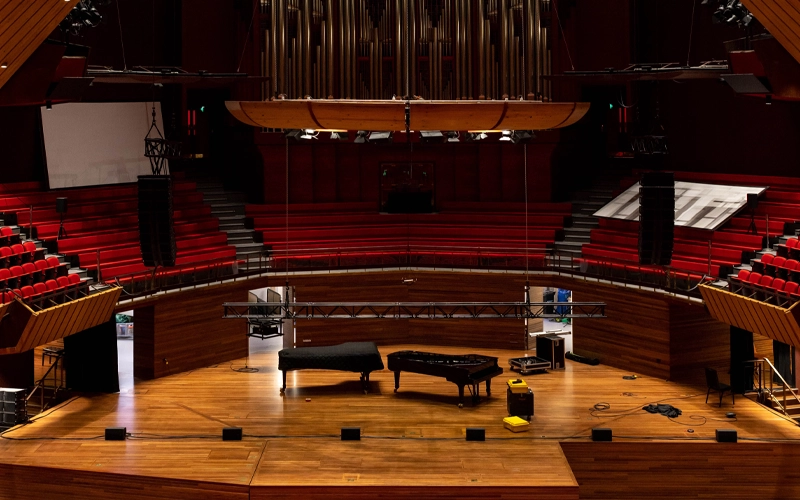
Christchurch Town Hall. Photo: © Jono Parker
With his deadline approaching, Harold went to a concert at London’s Royal Festival Hall. Constructed in 1951, it follows the shoebox shape but is wider than traditional concert halls. Listening carefully, Harold noticed that the sound was very frontal with no sense of reverberation from the sides. He then went to a performance at the Concertgebouw in Amsterdam and experienced a much richer sound. He realised that the difference between the venues was down to the amount of sound reflected from the sides of the hall – the lateral sound. It was a revelation. Based on these findings, Harold recommended the Christchurch Town Hall design by architects Warren and Mahony as the most acoustically promising. In collaboration with fellow researcher Mike Barron, he used a former NASA computer to model the acoustics of the auditorium. He then worked closely with Warren and Mahony to add a series of lateral reflectors into the design. The Christchurch Town Hall opened in 1972 to much acclaim. The design was unique and groundbreaking, and the sound was clear and resonant. Its success sent reverberations around the world of concert hall design.
The discipline of acoustical engineering was now well underway here. The New Zealand Acoustical Society formed in 1973 with Harold as its first president. He also worked with the University of Auckland on the design of an acoustics research laboratory, which opened in the early 1980s. It remains a top-class research facility, used for both academic research and commercial acoustic testing of everything from building acoustics to environmental noise, vibration and communications.
Although architecturally the Wellington Town Hall retains its 1904 form, our new understanding of acoustics has informed its redevelopment and enabled a greater appreciation of its original features and design. To complement this, there'll be a new acoustic addition: shielding installed on the roof to block traffic and aircraft noise. A new, quiet air conditioning unit in the ceiling completes the fit out, making the building a space to enjoy for another 100 years.
Cindy Jemmett is Heritage Advisor at Te Ao Rangahau.
This article was first published in the June 2026 issue of EG magazine.