
19 Jun 2026
How a university’s mechanical engineering programme is helping to upskill technicians in Tonga and ensure the sustainability of the island nation’s medical equipment.
Low-resource countries such as Tonga depend on donated medical equipment, but it’s often expired, over-engineered or in a state of disrepair. Then add high humidity and high temperatures, which cause essential equipment to corrode and fail at much faster rates than in a New Zealand clinical setting. When University of Canterbury (UC) Associate Professor of Mechanical Engineering, Debbie Munro, first assessed the state of biomedical equipment in the Pacific Islands in 2018, she realised these donations were often addressing the symptoms rather than the cause.
“There’s no place to dispose of failed equipment in Tonga, and we realised a more sustainable approach may be to accept how their systems work and to help them improve what’s already there.”
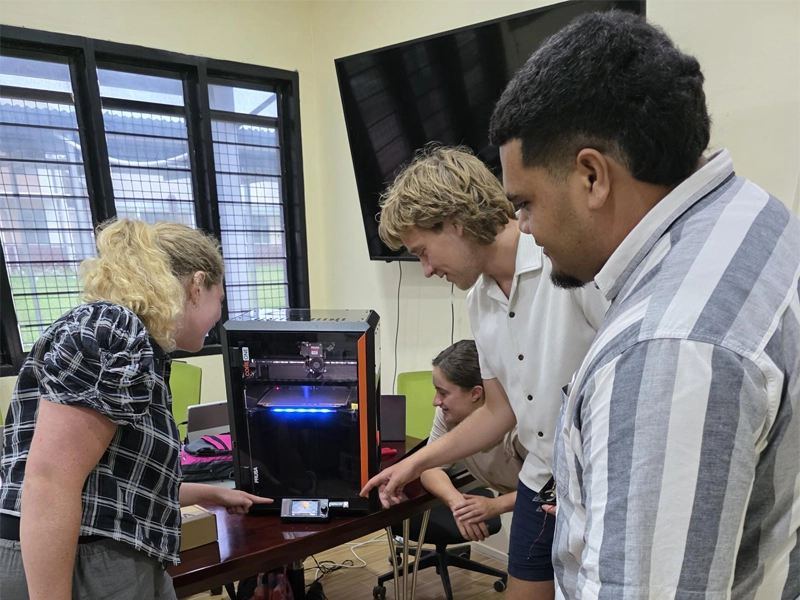
Emma Gardiner, Matisse Laskey (seated), Fergus McMullan and a Tongan technician work on a newly donated 3D printer. Photo: Debbie Munro
Debbie says well-meaning organisations often arrive in low-resource countries with expensive equipment and specialist expertise, address the immediate problem and then depart, taking all the knowledge with them.
Running since 2019, the UC programme is designed to do the opposite: build self-sufficient local capability that doesn’t depend on outside intervention to be sustainable in the long term. Each summer, third- and fourth-year mechanical and mechatronic engineering students, plus Debbie and two other staff members, spend six weeks training at the University then four weeks in Tonga, partnering with local technicians to work at the hospital and transfer practical skills.
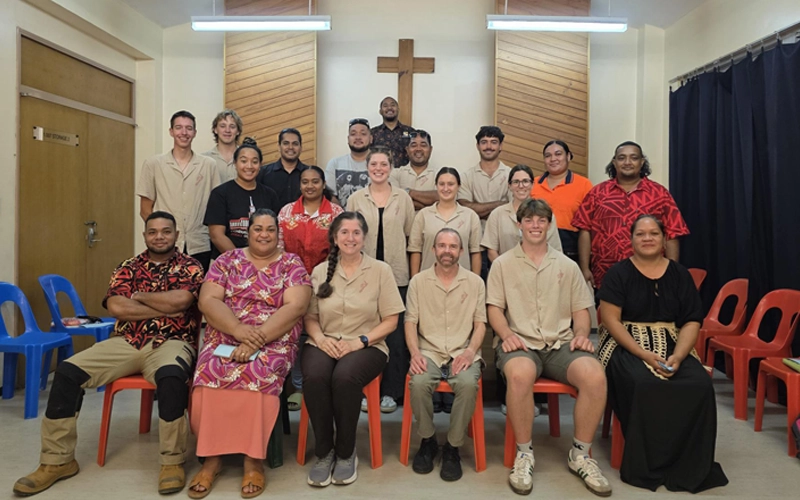
UC Biomedical Outreach Programme team with technicians and leadership representatives at Vaiola Hospital. Photos: Debbie Munro
There are currently eight hospital technicians servicing all of Tonga. Debbie’s team teaches them anatomy and physiology and the clinical purpose of each device. They also teach the technical theory and operation of the equipment, including hands-on lab exercises. The equipment includes ventilators, incubators, patient monitoring systems and fluid infusion pumps. For Debbie, with a background in biomechanics and diagnostic sensors, it’s a methodical framework that builds understanding from the ground up rather than parachuting in quick fixes.
For Liam Bately, a fourth-year mechanical/biomedical engineering student, the Tonga programme is one strand of a broader ambition to work at the intersection of engineering and medicine. As co-founder of UC’s mechanical engineering society, MECHSoc (which attracted 500 members in its first year), and later as President of The UC BIOMED Club (which Debbie founded), he seeks out projects that go beyond the conventional engineering curriculum.
“This project was a great opportunity to apply engineering thinking in conditions that bear no resemblance to a New Zealand lab.”
Liam was instrumental in coordinating the students and fundraising.
Debbie says the programme’s broader significance lies in how it changes the way engineering students think about design, producing graduates with a more adaptable approach to design constraints.
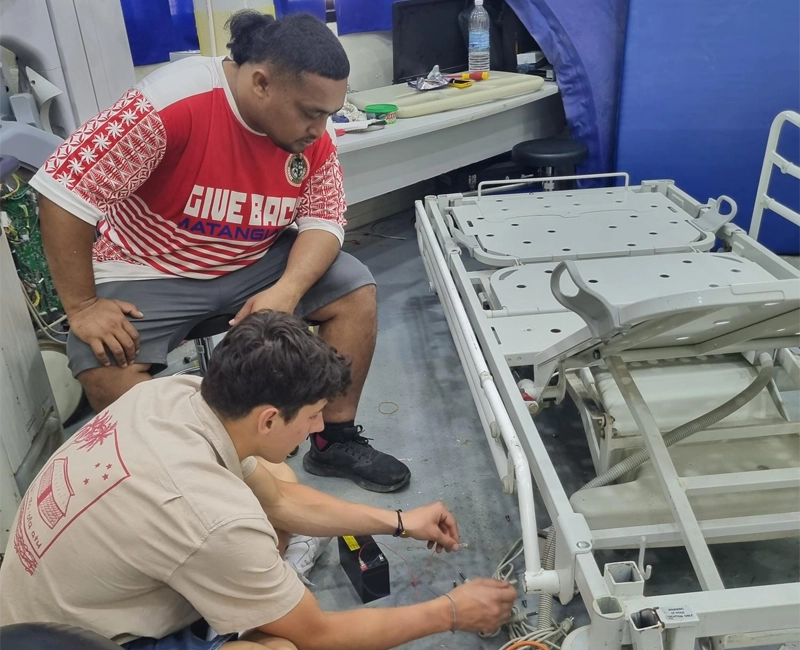
Caleb and technician evaluate an electric hand control. Photo: Debbie Munro
“For example, I spoke with a doctoral student working on a separate skin-based glucose monitor device. Following these ideas learnt from Tonga regarding reusability, she has redesigned the device to be donatable and repairable.”
For Toci Katsuki, Director of the Biomedical Workshop at Vaiola Hospital (Ministry of Health, Tonga), the project makes a significant impact on the health of Tongans.
“It’s always a great pleasure to have a [UC] team over every year and something we always look forward to. Thank you all for the knowledge shared with our team in Tonga and for gaining more recognition from our Honourable Minister, CEO of Health, and Directors.”
Students from this year’s trip are preparing the next cohort, delivering presentations and seminars about their experiences, and fundraising. The programme is looking to expand its regional reach, with developing connections to Samoa.
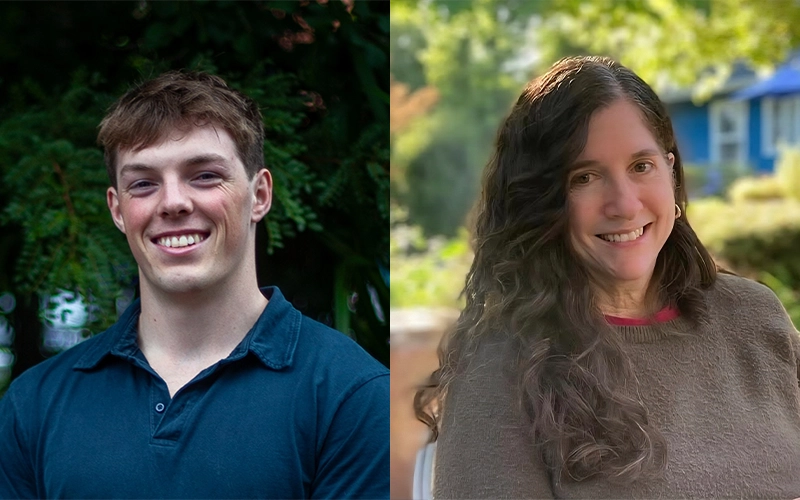
Liam Bately is former Dux and Deputy Head Boy of Christchurch Boys’ High School and a Student Volunteer Army Ambassador. In 2025 he completed a biomedical engineering internship in France, sponsored by the French Embassy in New Zealand. An Engineering New Zealand Student Member, Liam’s working on the creation of an artificial heart as part of his final-year project. Before arriving at UC, Debbie Munro spent more than a decade in the orthopaedic medical device industry, and now leads research on wireless implantable sensors for monitoring bone healing. She worked at NASA Ames Research Centre while completing a master’s degree at Stanford University, and also writes science thriller novels in her spare time.
Healthcare improvements at a glance
Autoclave steam sterilisation: students repaired and distributed units to five clinics across the islands, enabling each clinic to independently sterilise instruments such as scalpels.
Ventilators: none of the 15 ventilators donated during Covid-19 were functioning on arrival in January 2026. Thirteen are now operational, with eight in active service, including on outer islands.
Hospital beds: electronic failures caused by humidity and corrosion were repaired, and local technicians can now maintain these beds.
3D printing: two printers from Christchurch now produce replacement parts and low-cost medical devices on site, including functional otoscopes with laser-cut lenses for nurses diagnosing ear, nose and throat infections. Tongan technicians are trained in CAD to design their own replacement parts going forward.
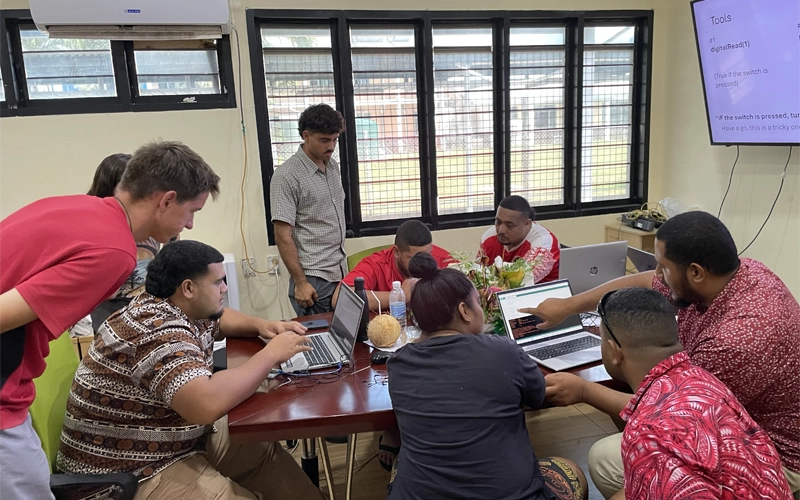
Philip Brand (standing on left) and Josh Bergerson (standing on right), teach Tongan technicians about microcontrollers. Photo: Debbie Munro
This article was first published in the June 2026 issue of EG magazine.