
21 Apr 2026
To address the growing infrastructure deficit, standardising bridge replacements has become a cornerstone of KiwiRail’s strategy for managing its ageing bridge stock.
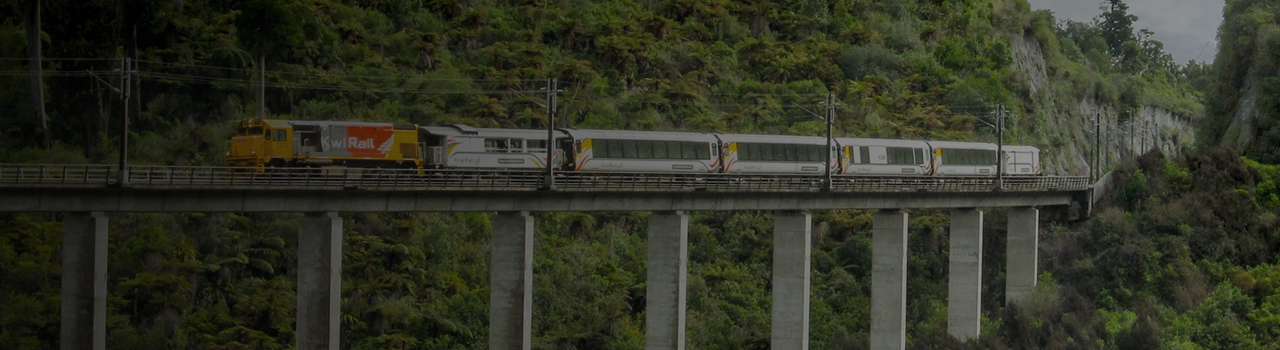
KiwiRail manages 1,300 bridges spanning 55km, with an average age of 76 years. Despite limited funding, service levels have been maintained, but costs are escalating. Bridge replacement costs exceeded NZ$300,000 per metre in 2021 and the structural deficit was predicted to reach NZ$11 billion over the next 70 years. Without life-extension strategies, safety and network integrity are at risk.
Standardising bridge replacements
In 2021, a typical bridge span cost approximately $300,000 per metre and could take between three to five years to deliver after being identified as end-of-life, which is an unsustainable model. In response, KiwiRail launched a modernisation programme aimed at making bridge delivery more structurally efficient, cost-effective and faster. The first step was harmonising design standards, transitioning from American (AREMA) to New Zealand and Australian rail/road standards. By adopting and tailoring the AS5100 load model to suit New Zealand’s rolling stock and future requirements, KiwiRail achieved a 40 percent improvement in design efficiency.
To illustrate: the new standardised deck design uses 30 percent less concrete, features a shallower construction depth (providing greater headroom without raising track levels), eliminates the need for complex post-tensioning, and maintains the same span capabilities as previous designs. These concrete bridge spans are also designed for delivery via KiwiRail’s own network, maximising internal logistics and reducing road congestion.
Improving buildability and reducing risk
Buildability was a key focus during the development of KiwiRail’s standard designs. Maximum lift weights were capped to align with industry capabilities, enabling contractors to confidently invest in reusable staging and crane infrastructure. KiwiRail also promoted automation and off-site manufacturing, aiming to produce as many components as possible in controlled environments to improve quality and reduce on-site complexity.
To complement new builds, KiwiRail developed innovative standardised life-extension techniques, particularly for timber substructures, which make up 25 percent of the network.
A frequently overlooked aspect of bridge replacement is the inherent delivery risk borne by contractors. Through the standardisation programme, KiwiRail sought to reduce this risk to provide greater confidence to the industry during tendering. One example is the development of weathering steel decks. Traditionally, contractors were responsible for procuring materials and fabricating decks in time for planned rail closures (Blocks of Line). Steel procurement alone could take between six and eight months, with fabrication adding another few months – delays that contractors had to manage and absorb.
Instead, KiwiRail directly contracted fabricators for the production and delivery of bridge spans, which were then provided to contractors as free-issue components. This approach shifted delivery risk to KiwiRail (reduced through standardisation), removed supply uncertainty for contractors, and accelerated steel structures renewal timeframes by 12 to 18 months. This has led to more competitive pricing of steel spans, delivering cost savings which KiwiRail reinvests into other bridge projects. This strategy created a visible pipeline of work for the industry, improving confidence and reducing risk.
As a direct result of this initiative, KiwiRail costs for steel span bridges have reduced from close to $300,000 per metre to below $140,000 per metre. While material costs remained constant, the industry benefitted from a clear understanding of KiwiRail’s bridge replacement approach, enabling more efficient planning and execution.
Extending life and reducing the deficit
Full-scale replacement of all bridge spans remains impractical. To complement new builds, KiwiRail developed innovative standardised life-extension techniques, particularly for timber substructures, which make up 25 percent of the network. One such method, called entombing, is a low-cost solution (under NZ$150,000 per pier) that extends the life of timber piers by more than 30 years and can be implemented by KiwiRail’s in-house crews.
Additionally, structural health monitoring and digital twin technology are being used to demonstrate inherent capacity and avoid unnecessary strengthening. Together with standardised designs, these life-extension initiatives have reduced the structural deficit from NZ$11 billion in 2021 to NZ$3 billion in 2025. With other strategies under development, KiwiRail aims to reduce this figure further.
The nation’s extensive bridge network faces mounting challenges from ageing infrastructure, rising costs and increasing demand. KiwiRail’s standardisation programme demonstrates how harmonised design, improved buildability and innovative life-extension strategies can significantly reduce costs, accelerate delivery and mitigate risk. By combining modernisation with proactive maintenance and digital technologies, KiwiRail has already cut its structural deficit by more than two-thirds, setting a blueprint for New Zealand for sustainable asset management across all bridges in the country.
Liam Coleman FEngNZ is KiwiRail's former Professional Head (Structures) – Infrastructure. He is Vice Chair of the Bridge Engineering Technical Society.
This article was first published in the March 2026 issue of EG magazine.