
19 Aug 2026
The renewed focus on Auckland’s second harbour crossing has reignited a decades-long debate, but one encouraging aspect of the Government’s latest announcement is the emphasis on undertaking a Detailed Business Case and securing long-term, cross-government agreement before locking in a solution.
Years of shifting priorities and changing approaches have resulted in plenty of discussion but no delivery, and another business case will understandably be frustrating for many.
However, for a project of this scale, it’s far more important to ensure we make the right decision not just a quick one. A rigorous business case process will ensure decisions are grounded in evidence and made through a long-term planning lens, which is crucial if engineers, planners and the construction sector are to deliver on what is asked of them.
It also allows us an opportunity to get a clear understanding of the problem we are trying to solve - that question must be at the centre of the conversation.
Is the primary objective greater transport capacity, or improved resilience? Are we after better network connectivity or accommodating new and future public transport options? The answer to those questions will ultimately determine the most appropriate engineering solutions.
At that point, our engineers, planners and decision-makers can do what they do best - evaluate the technical, environmental, social and economic considerations needed to deliver the best outcome.
While the scale of this project would likely be the most significant infrastructure project we’ve ever undertaken as a country, it is well within the capability of our engineering, planning and construction sectors to deliver.
Auckland's transport needs, population patterns and urban form will continue to evolve over coming decades, and any new crossing must be planned for future generations and capable of serving future generations 50 to 100 years from now.
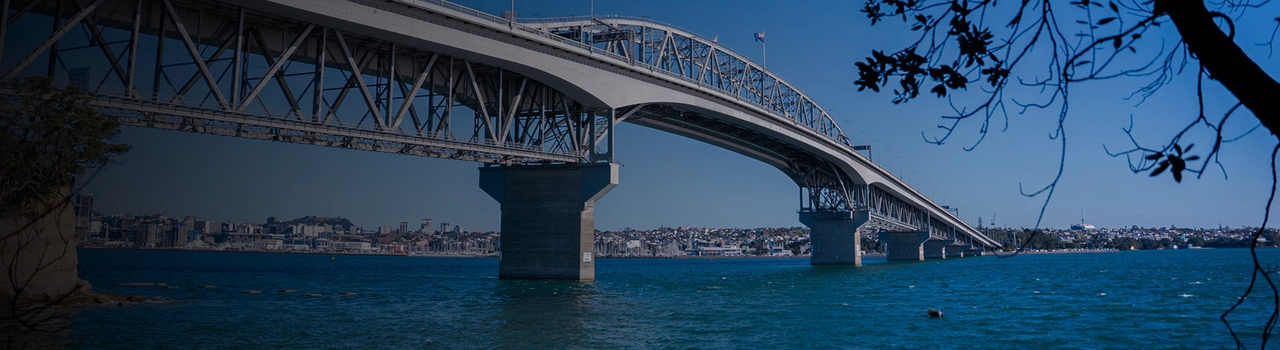
Auckland Harbour Bridge itself provides a useful reminder of the importance of long-term thinking. The bridge's traffic-carrying capacity was exceeded within a relatively short period after opening, highlighting the risks of underestimating future demand and growth.
For engineers, success will not be measured by whether the outcome is a bridge or a tunnel, but by whether the process identifies the right problem, rigorously evaluates the options and ultimately delivers infrastructure that serves Auckland and Aotearoa for generations to come.