
17 Sep 2026
From being in a minority at university to the first woman engineer hired by a 65-year-old firm, Kate Macdonald has built a career defined by success and a determination to help others.
An Electrical Engineer at Pedersen Read Consulting in Christchurch, Kate Macdonald CMEngNZ CPEng has dedicated hundreds of hours to increasing the number of women entering the profession. She believes the main barrier here is a lack of role models.
“My dad is a mechanical engineer, and we also had an engineer female family friend, so I knew what was possible. But most people in their day-to-day lives don’t have contact with engineers like they do with other professionals, such as doctors.”
In the late 1990s, as an undergraduate at the University of Canterbury, Kate set up an outreach programme at secondary schools.
“I thought well, I need to go and tell young women about engineering because there’s just not enough of us. I sent a letter to schools saying, would you like us to come and talk to your students?”
Armed with some overhead projector slides, Kate and a fellow engineering student spoke to school students at assembly, or during class or lunchtime. A quarter of a century later, she’s still spreading the word and has been involved in numerous school outreach programmes, including Engineering New Zealand’s Wonder Project, designed to encourage rangatahi into STEM subjects.
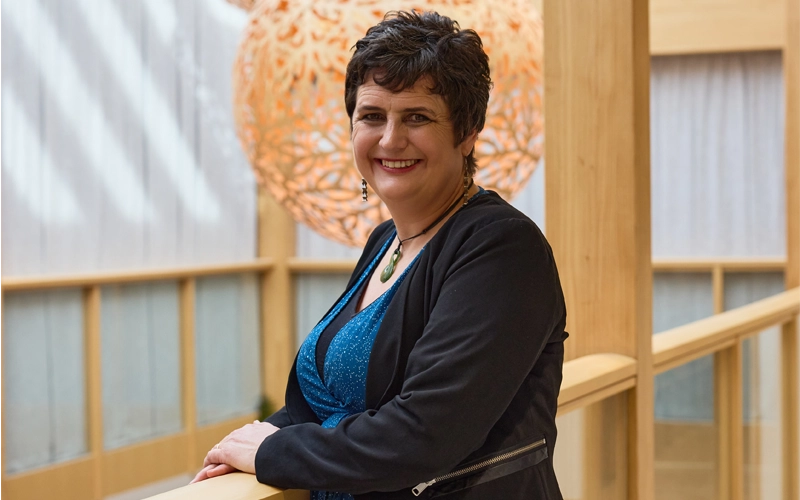
Photo: Lightchasers
“That’s been the most inspiring. I’ve done that a few times and just seeing the enthusiasm of the kids having fun while learning about Newton’s Law is really rewarding – you’re inspiring the future.”
Kate has received recognition for her work, including a Dark Sky Excellence Award for her lighting design of Oi Manawa, the Canterbury Earthquake National Memorial.
“That was a very special one because it was more than an engineering project. I’d been through the earthquakes myself and that had a profound impact on me and the community, so being able to contribute in a small way to a memorial that honours the lives of the people who lost their lives and acknowledge what we went through as a city was really meaningful.”
Another highlight was the Youth Hub project, a Christchurch facility for at-risk young people.
“Being able to contribute to projects with a strong social purpose and make a difference in the lives of vulnerable young people is very important to me.”
On a personal level, Kate says the most meaningful feedback comes from the enthusiastic responses of children at her school outreach work.
More recently, she’s been working on resource consents, meaning influencing outcomes before construction begins.
“I’m involved in the assessment of environmental effects, where I look at what the effects of the lighting associated with the proposal will be, as well as being an expert witness for the resource consent process.”
She says this work is important as it will have an impact on future generations, ensuring a balance between operational requirements and the protection of wildlife and the night sky, “and it aligns with the concept of kaitiakitanga”. She hopes her legacy will be that she has been a role model for young people and encouraged them to consider engineering as a career.
Being able to contribute to projects with a strong social purpose and make a difference in the lives of vulnerable young people is very important to me.
“And I always want to leave things in a better way than I found them, for example, using the minimum light you need for the task, paying attention to the colour temperature – such as avoiding blue light which is a lot more visible to animals.”
A strong advocate for flexible work, Kate has worked part time since returning from five years of parental leave with her three children.
“I was a bit nervous about re-entering the workforce,” she says. “But as I said in my application, I’d spent five years multitasking and working on my budgeting and conflict resolution skills. If you can facilitate an argument between two toddlers, you’re well placed to deal with difficult clients.”
She believes flexible and part-time opportunities are key to increasing the number of mothers returning to the profession.
“I think employing a working mum is a win-win situation for firms because we’re so efficient with our time. We know that we’re only here for a short time so we’re going to get the work done. I currently work 20 hours a week, but I doubt I’d get twice as much done if I worked 40.”
Women make up around 15 percent of the profession in Aotearoa, and Kate says this is not enough.
“Women experience the world differently to men, and engineers are designing the world we live in. So, isn’t it true that the people making those decisions should reflect the people living in it, rather than just a small portion?”
This article was first published in the September 2026 issue of EG magazine.