
15 Oct 2026
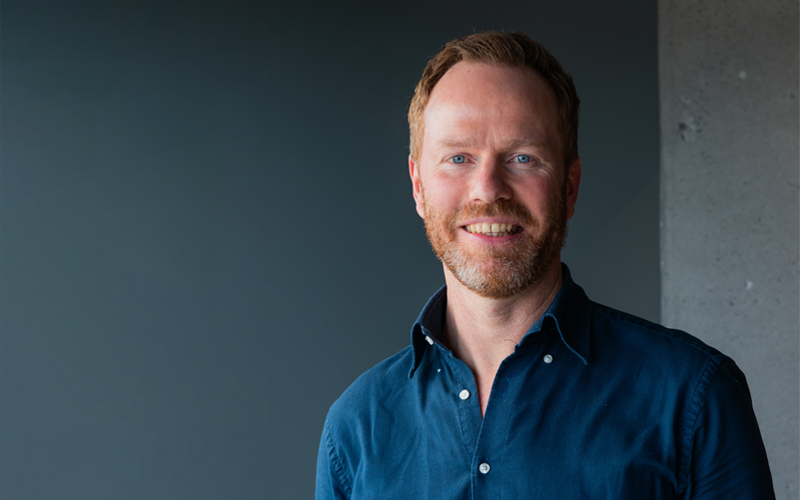
Matt Mules MEngNZ was recognised with the Luminary Award at the 2026 Engineering New Zealand Auckland Branch Awards for actively and positively promoting Engineering New Zealand and the engineering profession. His career of more than 22 years has been spent in the construction industry, starting as a design consultant with Tonkin + Taylor.
An early secondment to the Northern Gateway Alliance’s tunnel construction team sparked a passion for construction and tunnelling. He spent the next 15 years working for tunnelling contractors in New Zealand and the United Kingdom, including working on central London’s Crossrail project and Auckland’s Central Interceptor. For the past four years Matt’s been General Manager at Oxcon. He's also Chair of the New Zealand Tunnelling Society, an Engineering New Zealand collaborating technical society.
What’s on your bedside table?
Usually a few books – one or two of mine and one that probably belongs to one of my kids – a magazine (possibly still in its wrapper), a glass of water and a bedside lamp. At the moment the books are Nigel Latta’s Lessons on Living and Viktor Frankl’s Man’s Search for Meaning, both of which I have recently finished and haven’t yet put away.
Let’s focus on those books, why did you choose them?
They’re an interesting pairing, to be honest. I’ve always liked Nigel Latta and the way he took complex concepts and explained them so that everyday people could understand them, so I was naturally drawn to his book. A friend pointed me towards Man’s Search for Meaning as a deeply thought-provoking read, which proved to be absolutely true.
How do they help you in your role?
I’ve only recently read them, but some of the messages ring very true for me. Nigel Latta talks about the idea of “driving the bus” – not being a passenger in your own life, but making conscious, intentional decisions – which I wholeheartedly subscribe to. Aligned with this in many ways is Viktor Frankl’s message that the last of the human freedoms is the ability to choose one’s attitude in any given circumstance. I’m always trying to improve the way I handle difficult situations and I find lessons like these, conveyed through people’s hard-won experience, really valuable to reflect on.
Which group of engineering professionals are these books most helpful for?
All engineers would benefit from the kind of self-reflection these books prompt. As engineers we work very hard on what we deliver and on the technical skills required to do our jobs well, but we don’t always invest enough time and energy in developing our behaviours and our responses to complex situations, which are arguably far more important than technical skills.
What is the top book you would recommend to engineers and why?
How Big Things Get Done by Bent Flyvbjerg and Dan Gardner – a brilliant dissection of the challenges of project management and delivery, underpinned by a proper data set and rigorous analysis. If everyone involved in delivering projects in Aotearoa read, understood and implemented the lessons in this book, we would be a lot better off.
What book has most influenced your career?
Turn the Ship Around! by David Marquet. This book was recommended by a mentor earlier in my career. Plenty of great messages, in particular about the flaws of micromanagement and control. I took a lot from this which influenced my thinking in how to lead a team.
What book is on your “must read” list?
Into Thin Air by Jon Krakauer, a firsthand account of the 1996 Everest disaster. I’ve been meaning to read this for quite a while now.
What do you read for fun?
I read widely, but the books I probably enjoy most are adventure stories, particularly biographies. One I really enjoyed recently was Shackleton by Ranulph Fiennes, which tells the extraordinary story of Ernest Shackleton’s adventures and misadventures.
Speed read
Ebook/paper copy
Borrow/own
Bookmark/turn down page
This article was first published in the September 2026 issue of EG magazine.