Date: |
29 Apr 2027, 9.00AM – 4.30PM |
duration: |
7 hrs 30 mins |
Venue: |
To be confirmed - Auckland |
Address: |
Auckland |
CPD hours: |
7.5 hrs |
Cost: |
|
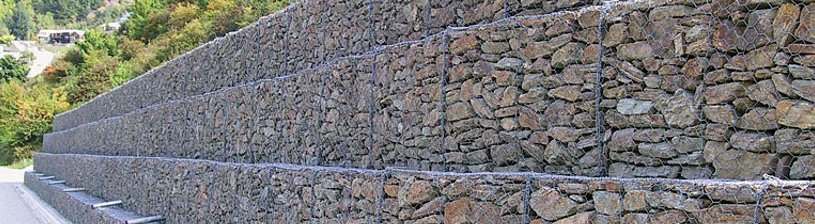
The type and complexity of a retaining wall is typically governed by various factors such as site-specific ground conditions, wall deflection limits, wall loading, wall type, wall height, construction staging and/ or site access conditions.
Participants will gain a fundamental understanding of the key aspects and concepts of the design and construction of common types of gravity retaining walls such as cantilevered reinforced concrete walls, block walls and MSE walls.
The following modules will be covered:
1. Fundamentals of different retaining wall and retention systems (e.g., wall types, scope, performance, geotechnical design parameters and suitable site investigation methods).
2. Fundamental design principles of gravity retaining walls under static and seismic loading conditions.
3. Fundamental construction methods for selected gravity retaining wall types (e.g., cantilevered reinforced concrete walls, block walls and MSE walls).
4. Design example: Block wall and simple MSE wall
Is this course for you?
-
Suitable as a refresher for more experienced geotechnical, civil, and structural design engineers, as well as construction professionals.
-
Suitable as an introduction for early-career engineers or constructors to understand the fundamentals of static and seismic wall designs and the fundamental differences between gravity walls and embedded retaining walls.
-
Modules 1 and 3 are specifically designed for construction professionals, including: project and site engineers, project and construction managers, supervisors, builders, specialist contractors.
-
Focuses on key risks related to the general design and construction aspects of retaining walls and other retention systems.
-
Participants should be familiar with fundamental geotechnical and structural design principles.
-
No prior experience in retaining wall design is required.
Learning outcomes
This course is designed to help you:
- explain the difference between gravity walls and embedded retaining structures
- explain the difference between ‘active’ and ‘passive’ wall systems
- list selected performance criteria for gravity retaining walls
- identify suggested site investigation and soil testing methods to obtain reliable geotechnical design parameters for the design of gravity retaining walls
- apply design fundamentals for gravity retaining walls considering aspects like static and seismic earth pressure as well as sliding, bearing capacity and global stability
- identify fundamental construction aspects and main construction risks associated with cantilevered reinforced concrete walls, block walls and MSE walls.
Format
This highly practical course is presented ‘live’, either face-to-face or online, which allows a close interaction with the presenter.
The first part of the course will cover the fundamentals of the design (modules 1 and 2) and construction (module 3) of gravity retaining walls. At the end of the course, one real world design example (module 4) will be presented to support the learning experience.
There will be sufficient time for discussions throughout the day.
Presenter Information
Dr Martin Larisch is an Independent Geotechnical and Civil Engineer (Director of Larisch Consulting Ltd) and a Fellow with Engineering New Zealand. He has been involved in the design, construction and verification of a large number and variety of different ground retention systems for more than 25 years across New Zealand, Australia and Germany.
Prior to starting his own consultancy firm, he held various technical and operational positions for some of the leading geotechnical contracting and consultancy firms in New Zealand, Australia and Europe.
Throughout his professional career (which he started as a carpenter in Germany) he gained in-depth understanding and a holistic perspective of the different life cycle requirements and the risk profile of various retaining walls, deep basement, shafts and temporary excavation systems from feasibility stage to project delivery. He has also been involved in the assessment of defective retention systems and the remediation of such defects.
Martin has published more than 30 technical papers for international journals and conferences, and he was involved in the review and development of various best industry guidelines for deep foundations in New Zealand, Australia and Europe.
He was appointed Adjunct Associate Professor at the University of Queensland (Brisbane) from 2014 until 2021 and facilitated numerous lectures and seminars related to ground engineering.
Martin is currently representing the New Zealand Geotechnical Society (NZGS) in Technical Committee TC212 ‘Deep Foundations’ at the International Society for Soil Mechanics and Geotechnical Engineering (ISSMGE). He has been a member of the expert panel for the development of NZGS/ SESOC Piling Specification and the NZGS ‘Tiered Retaining Wall’ Practice Note.
This course introduces the general concepts and principles of the design and the construction of gravity retaining walls such as cantilevered reinforced concrete walls, block walls and Mechanically Stabilized Earth Walls (MSE). Participants will explore the general differences between gravity retaining walls and embedded retaining structures, the suggested minimum site investigation requirements, and the general design principles in accordance with relevant codes, standards and guidelines.
The type and complexity of a retaining wall is typically governed by various factors such as site-specific ground conditions, wall deflection limits, wall loading, wall type, wall height, construction staging and/ or site access conditions.
Participants will gain a fundamental understanding of the key aspects and concepts of the design and construction of common types of gravity retaining walls such as cantilevered reinforced concrete walls, block walls and MSE walls.
The following modules will be covered:
1. Fundamentals of different retaining wall and retention systems (e.g., wall types, scope, performance, geotechnical design parameters and suitable site investigation methods).
2. Fundamental design principles of gravity retaining walls under static and seismic loading conditions.
3. Fundamental construction methods for selected gravity retaining wall types (e.g., cantilevered reinforced concrete walls, block walls and MSE walls).
4. Design example: Block wall and simple MSE wall
Is this course for you?
-
Suitable as a refresher for more experienced geotechnical, civil, and structural design engineers, as well as construction professionals.
-
Suitable as an introduction for early-career engineers or constructors to understand the fundamentals of static and seismic wall designs and the fundamental differences between gravity walls and embedded retaining walls.
-
Modules 1 and 3 are specifically designed for construction professionals, including: project and site engineers, project and construction managers, supervisors, builders, specialist contractors.
-
Focuses on key risks related to the general design and construction aspects of retaining walls and other retention systems.
-
Participants should be familiar with fundamental geotechnical and structural design principles.
-
No prior experience in retaining wall design is required.
Learning outcomes
This course is designed to help you:
- explain the difference between gravity walls and embedded retaining structures
- explain the difference between ‘active’ and ‘passive’ wall systems
- list selected performance criteria for gravity retaining walls
- identify suggested site investigation and soil testing methods to obtain reliable geotechnical design parameters for the design of gravity retaining walls
- apply design fundamentals for gravity retaining walls considering aspects like static and seismic earth pressure as well as sliding, bearing capacity and global stability
- identify fundamental construction aspects and main construction risks associated with cantilevered reinforced concrete walls, block walls and MSE walls.
Format
This highly practical course is presented ‘live’, either face-to-face or online, which allows a close interaction with the presenter.
The first part of the course will cover the fundamentals of the design (modules 1 and 2) and construction (module 3) of gravity retaining walls. At the end of the course, one real world design example (module 4) will be presented to support the learning experience.
There will be sufficient time for discussions throughout the day.
Presenter Information
Dr Martin Larisch is an Independent Geotechnical and Civil Engineer (Director of Larisch Consulting Ltd) and a Fellow with Engineering New Zealand. He has been involved in the design, construction and verification of a large number and variety of different ground retention systems for more than 25 years across New Zealand, Australia and Germany.
Prior to starting his own consultancy firm, he held various technical and operational positions for some of the leading geotechnical contracting and consultancy firms in New Zealand, Australia and Europe.
Throughout his professional career (which he started as a carpenter in Germany) he gained in-depth understanding and a holistic perspective of the different life cycle requirements and the risk profile of various retaining walls, deep basement, shafts and temporary excavation systems from feasibility stage to project delivery. He has also been involved in the assessment of defective retention systems and the remediation of such defects.
Martin has published more than 30 technical papers for international journals and conferences, and he was involved in the review and development of various best industry guidelines for deep foundations in New Zealand, Australia and Europe.
He was appointed Adjunct Associate Professor at the University of Queensland (Brisbane) from 2014 until 2021 and facilitated numerous lectures and seminars related to ground engineering.
Martin is currently representing the New Zealand Geotechnical Society (NZGS) in Technical Committee TC212 ‘Deep Foundations’ at the International Society for Soil Mechanics and Geotechnical Engineering (ISSMGE). He has been a member of the expert panel for the development of NZGS/ SESOC Piling Specification and the NZGS ‘Tiered Retaining Wall’ Practice Note.
Presenters
Martin Larisch