
21 Apr 2026
The recent spate of extreme weather events across New Zealand, including Cyclone Vaianu, highlights an increasing need for the industry to adapt and prioritise resilient design.
These "one-in-a-hundred-year" events are occurring with alarming frequency, exposing the vulnerabilities in our aging infrastructure and the critical need for robust on-site detention (OSD).
For civil and hydraulic engineers, the mandate is clear. We can no longer rely on traditional discharge methods. As urban density increases and impervious surfaces multiply, managing peak flow at the source has become the frontline of climate adaptation.
The regulatory shift to tighter controls
Traditional infrastructure was never spec'd for our current environment. Consequently, councils nationwide have tightened up on stormwater management requirements. As an engineer, OSD is no longer a "nice-to-have" for your clients - it is of course now a critical item for building consent.
The core engineering challenge is attenuation: capturing rainfall and releasing it through a calibrated opening to ensure the post-development peak flow does not exceed pre-development levels.
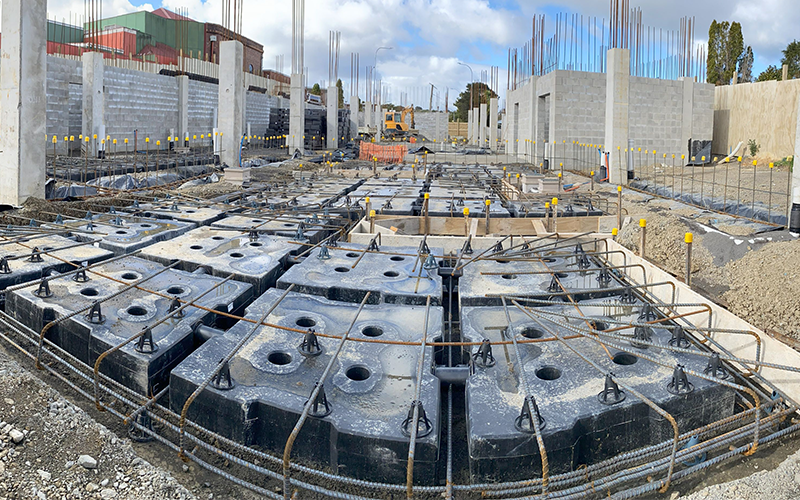
Aquacomb onsite detention tanks. Image: Provided
Why conventional systems are failing modern specs
While large-format underground tanks have been the historical default, they frequently clash with the realities of modern site constraints, such as -
- Invert level conflicts: In many high-density infill projects, the council stormwater connection is higher than the depth required for traditional buried tanks.
- Geotechnical barriers: High-water tables in coastal regions and volcanic basalt in Auckland make deep excavation both cost-prohibitive and risky.
- Spatial efficiency: On tight urban lots, the "footprint tax" of a large underground tank can compromise the structural integrity of neighbouring foundations or planned piling.
Engineered solutions for high-constraint sites
To meet stringent council requirements without blowing out project budgets or timelines, engineers are increasingly specifying modular, adaptable systems.
These include in-slab detention solutions that allow you to integrate storage directly into the concrete slab or beneath driveways. Not only do they solve many of the challenges mentioned above, but they can also be up to 38% cheaper than traditional underground tanks.
Solutions such as Watersmart’s Aquacomb product, can not only scale from 250L to over 30,000L, it helps to solve the "low-to-high" discharge problem by utilising the slab's elevation.
Broadening the scope
In-slab solutions are not the only effective way to help detain stormwater.
For existing properties, where in-slab solutions may not be viable, slimline above ground tanks can be installed to capture rainwater. These not only help to reduce flooding, but the water can be recycled and used around the property.
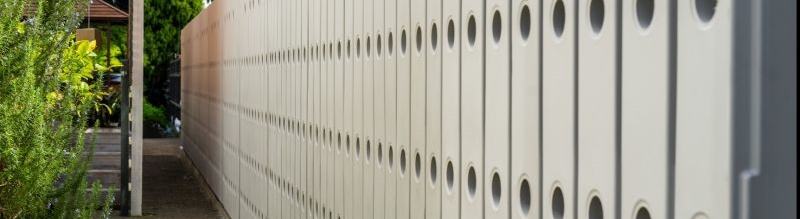
Some tanks can even be multipurpose. For example, FenceTank is a tank inside a fence. It mounts to fence posts, holds 1,000L per unit, and can be joined together to scale the storage capacity to the project’s requirements.
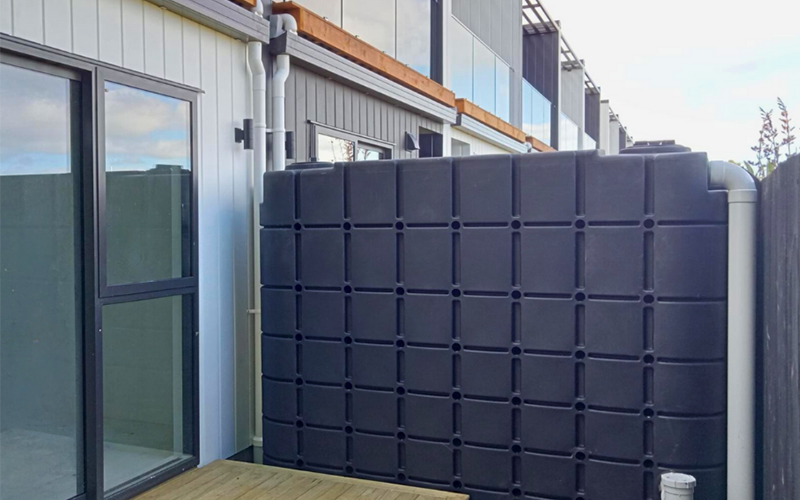
SLIM CITY rainwater harvesting tanks. Image: Provided
Infrastructure developers are also increasingly using permeable paving as an option for stormwater detention. Unlike asphalt, the water is absorbed into the surface therefore preventing surface flooding.
Porous Lane permeable paving is not only made from up to 60% recycled tyres, it filters the stormwater as it passes through. This removes pollutants and helps improve the quality of the water going into surrounding vegetation and therefore plant health.
Technical design considerations
When specifying these systems, ensure your design addresses the following -
- Maintenance access: Systems should include integrated access points like an AquaPit for sediment removal and orifice plate inspection.
- Dual-purpose systems: Consider combining OSD with rainwater harvesting for non-potable reuse (laundry/toilet) to help your clients meet sustainability targets, while satisfying detention mandates.
- Early integration: Confirm stormwater requirements and site-specific flow rates during the preliminary design phase to avoid expensive rework during the 11th hour of the consenting process.
Remember that the goal is no longer just "getting rid of the storm water." It is about precision flow control to protect the downstream network and the integrity of the built environment.
Watersmart is here to help. We offer a free design service, working with Engineering New Zealand members to help solve your most complex water challenges.
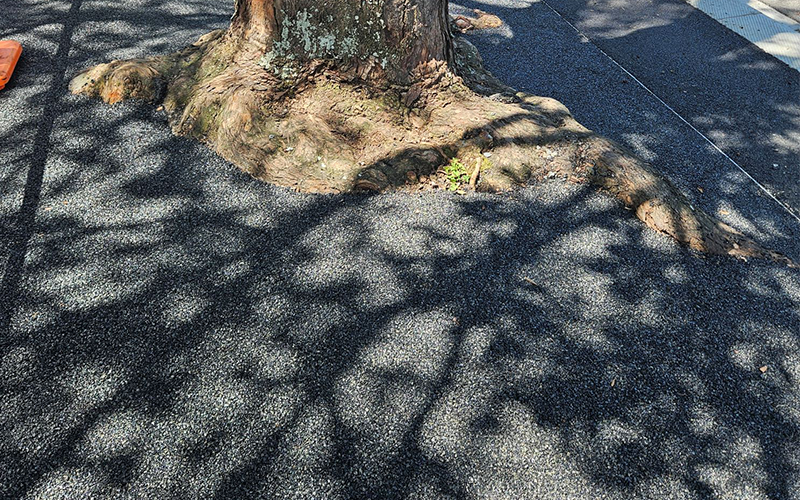
'Porous Lane permeable paving. Image: Provided
Upcoming event
Stormwater management and flood protection
5.30 – 7.00pm, Thursday 7 May
Join Engineering New Zealand partner Watersmart to explore practical approaches to stormwater and flood resilience at their Auckland based Innovation Hub. Gain tools to build capability, strengthen knowledge, and support smarter, more resilient wai outcomes.
This article was supplied by Watersmart, one of our partners. While we are pleased to share insights from our partners, Engineering New Zealand does not verify all claims and does not endorse specific products or services.