Date: |
27 May 2026, 5.30PM – 7.30PM |
duration: |
2 hrs |
Venue: |
University of Canterbury, Ernest Rutherford Building |
Address: |
University of Canterbury Kirkwood Avenue Christchurch |
Cost: |
Free event |
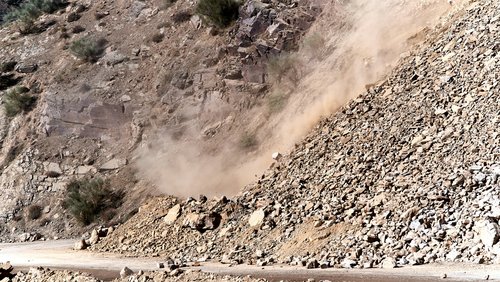
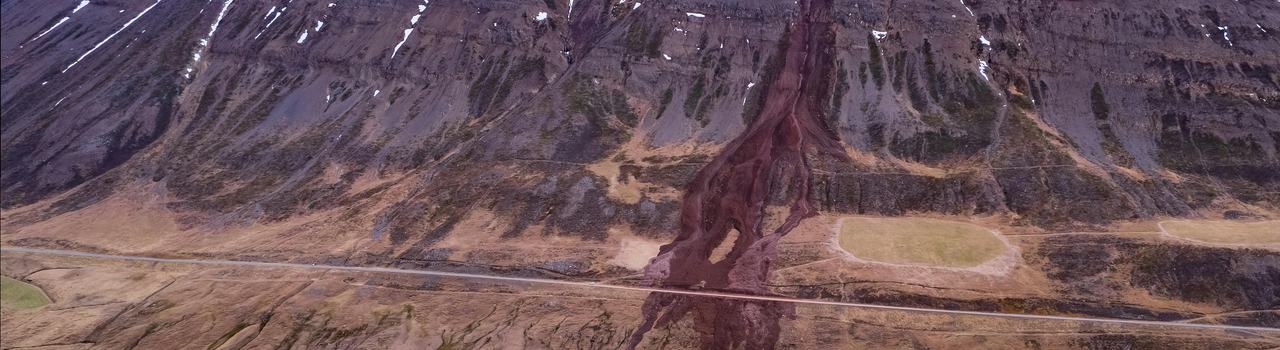
Extreme precipitation events can trigger widespread shallow landslides causing severe damage to buildings and infrastructure. Cyclone Gabrielle (February 2023) generated over 800,000 landslides across New Zealand’s North Island, representing one of the largest recorded regional landslide events. While climate change is projected to substantially increase extreme rainfall frequency and intensity across Aotearoa New Zealand, conventional static susceptibility mapping cannot adequately capture temporal hazard dynamics or downstream impacts, severely underestimating risk to the built environment.
Hear Livio present a novel probabilistic framework integrating rainfall-triggered landslide initiation, runout modelling, and impact assessment that explicitly incorporates climate change projections. The approach couples a space-time susceptibility model derived from a General Additive Model with a two-tier runout methodology that combines empirical regional screening with high-resolution physically-based runout simulations before applying existing vulnerability functions to quantify expected building losses. This represents the first climate-driven quantitative projection of future landslide hazards and impacts for an Aotearoa New Zealand case study, providing essential evidence for adaptation planning, infrastructure resilience investment and risk-informed decision-making.
Presenter Bio
Livio Dreyer is a PhD Student in the school of earth and environment at the University of Canterbury and will present a talk about A probabilistic rainfall-triggered shallow landslide impact framework considering climate change.
Join us for a presentation discussing novel probabilistic framework integrating rainfall-triggered landslide initiation, runout modelling, and impact assessment that explicitly incorporates climate change projections.
Extreme precipitation events can trigger widespread shallow landslides causing severe damage to buildings and infrastructure. Cyclone Gabrielle (February 2023) generated over 800,000 landslides across New Zealand’s North Island, representing one of the largest recorded regional landslide events. While climate change is projected to substantially increase extreme rainfall frequency and intensity across Aotearoa New Zealand, conventional static susceptibility mapping cannot adequately capture temporal hazard dynamics or downstream impacts, severely underestimating risk to the built environment.
Hear Livio present a novel probabilistic framework integrating rainfall-triggered landslide initiation, runout modelling, and impact assessment that explicitly incorporates climate change projections. The approach couples a space-time susceptibility model derived from a General Additive Model with a two-tier runout methodology that combines empirical regional screening with high-resolution physically-based runout simulations before applying existing vulnerability functions to quantify expected building losses. This represents the first climate-driven quantitative projection of future landslide hazards and impacts for an Aotearoa New Zealand case study, providing essential evidence for adaptation planning, infrastructure resilience investment and risk-informed decision-making.
Presenter Bio
Livio Dreyer is a PhD Student in the school of earth and environment at the University of Canterbury and will present a talk about A probabilistic rainfall-triggered shallow landslide impact framework considering climate change.
Presenters
New Zealand Geotechnical Society