

5 Mar 2026
With climate change throwing larger and more extreme weather events at us, the conversation around flood protection has undergone a fundamental shift. Engineers can no longer simply design for the 1% Annual Exceedance Probability (AEP) – they also need to design for insurability.
Major New Zealand insurers are moving to granular, risk-based pricing. This model goes away from suburb-wide averages, instead using high-resolution geospatial data to assign risk ratings to individual street addresses. For many property owners, particularly those in low-lying coastal or fluvial zones, this shift has resulted in steep premium hikes or, in extreme cases, "insurance retreat" – where flood cover is excluded entirely.
For engineers this now means working alongside building owners to implement engineered flood protection that does more than just stop water. It must provide the "documented mitigation" required to renegotiate risk profiles with underwriters.
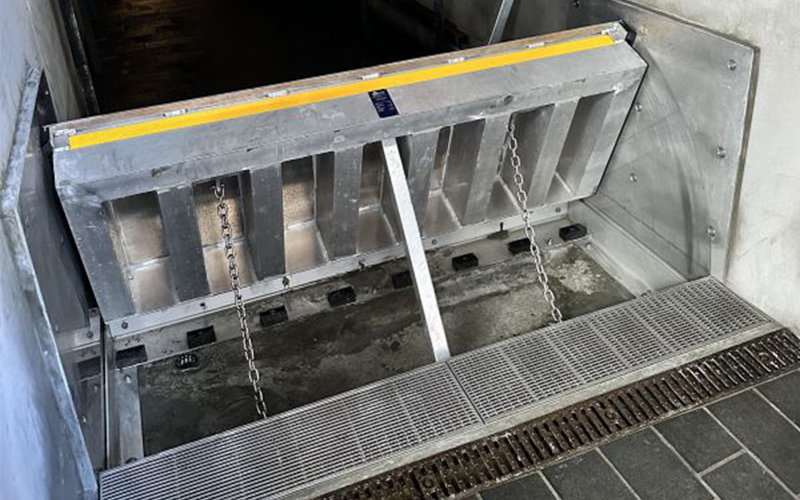
A flood barrier installation. Image: Watersmart
Permanent or temporary?
The options for flood barriers are endless and will of course depend on the property, its location, and the propensity for flooding. They can either be permanent passive barriers or temporary demountable barriers.
Permanent flood barriers
Permanent flood barriers are normally specified for critical infrastructure or where the "cost of failure" is extreme, and also where 24/7 readiness is required without human oversight, a key decision point when insurance underwriters are considering terms for a risk
Usage examples include the entry to carparks and basements in commercial and apartment buildings.
In these spaces, either concealed or passive tilting flood barriers are put in to automatically deploy by incoming water flows, such as one recently installed in a commercial building in Auckland’s Viaduct. The concealed barrier rises on the detection of water and seals off the entrance to their basement, thereby keeping the area safe and dry, and protecting valuable infrastructure and assets.
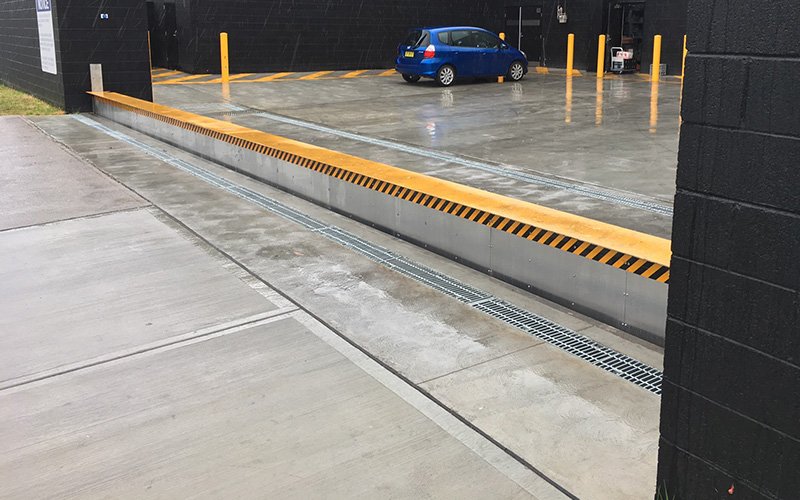
A concealed flood barrier. Image: Watersmart
Demountable flood barriers
As an alternative, demountable barriers have permanent ground or wall fixings with removable components that are only are deployed when a flood threat is imminent.
These work well for protecting commercial shopfronts or spaces inside buildings such as around lift shafts.
Demountable barriers have even been installed to protect a pump station which had been severely affected following the Anniversary weekend storm in 2024.
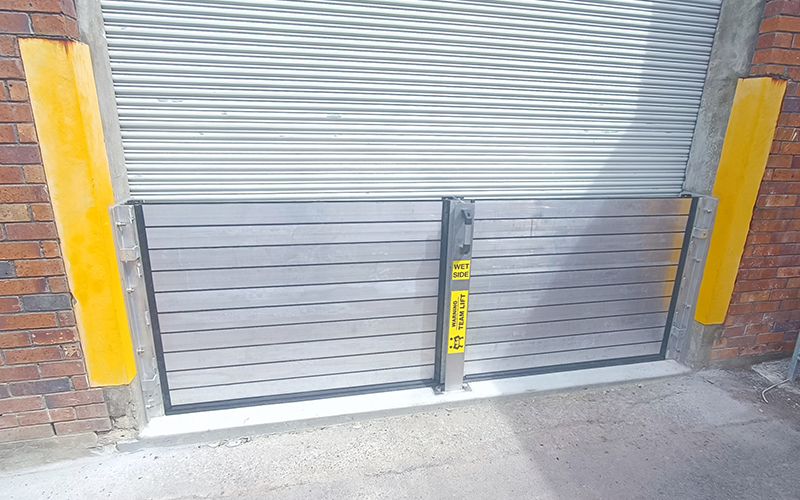
A demountable barrier. Image: Watersmart
Lightweight aluminium panels can now be quickly slotted into permanently installed end pieces to create a flood barrier as required. When not in use, the panels are easily removed, ensuring minimal disruption to day-to-day operations.
Working closely with engineers for deployment
By integrating permanent and temporary flood barriers, engineers can effectively shift a property’s risk category, ensuring that commercial and residential assets remain both physically safe and financially viable.
Because there’s no ‘one-size-fits-all’ approach when it comes to flood barriers, Watersmart works with civil and hydraulic engineers to develop the best solution for current and future flooding scenarios.
Find out more
www.watersmart.co.nz/floodfree
0800 110 808
This article was supplied by Watersmart, one of our partners. While we are pleased to share insights from our partners, Engineering New Zealand does not verify all claims and does not endorse specific products or services.