
25 Nov 2025
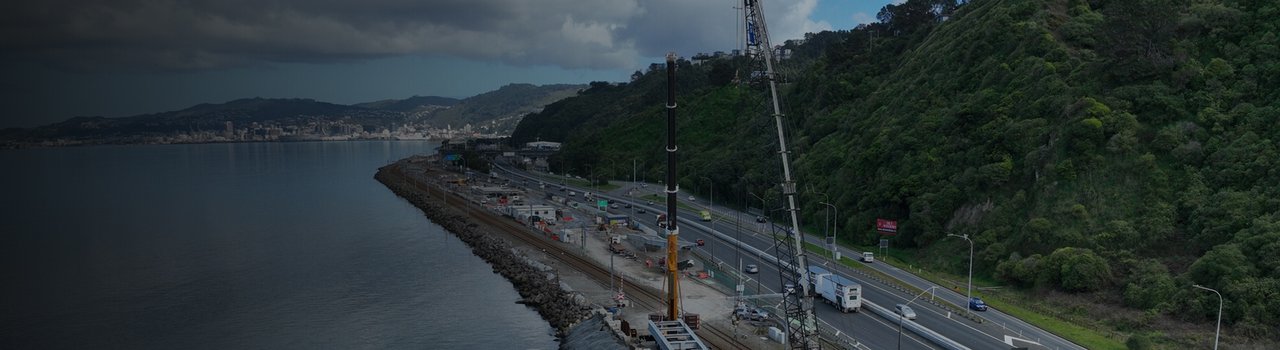
Since 2022, commuters along State Highway 2 have seen Te Ara Tupua – the new cycle and walking path between Petone and Wellington – gradually take shape along the harbour’s edge. But what’s less visible is the scale of ingenuity, planning and perseverance required to build it.
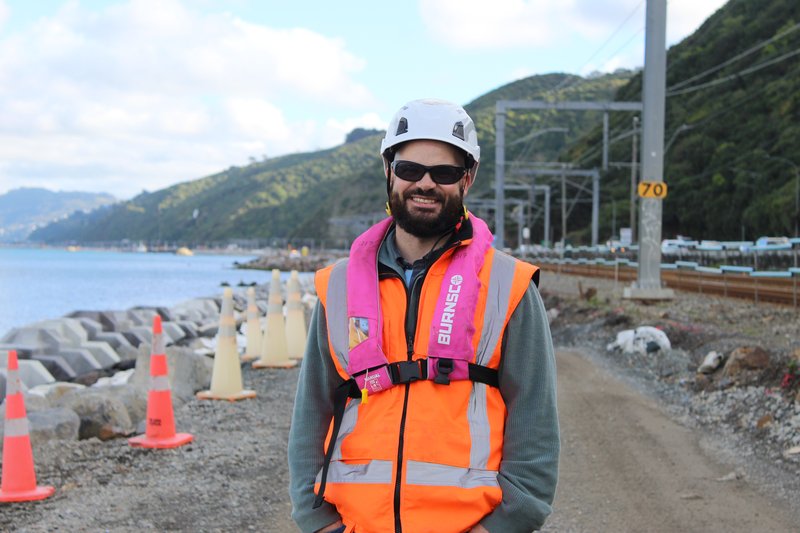
For Senior Project Engineer Brandon Murray from Downer, Te Ara Tupua has been a project of career firsts. We spoke with Brandon about his work on the project and how its unique challenges have tested his problem-solving skills.
Coastal work and alliance model – career firsts
As Te Ara Tupua is Brandon’s first coastal job, it presented a range of interesting new challenges.
“You have to plan around the tides and be able to adjust when the southerlies are coming through,” says Brandon “You need backup works you can still do in those conditions. Weather forecasts have become my best friend over the last year.”
It’s also Brandon’s first time working within an alliance structure – a collaborative form of construction contract where the client works as one team with design and construction partners to share the risks and benefits of the project. The members of Te Ara Tupua Alliance are NZTA/Waka Kotahi, Tonkin + Taylor, Downer NZ and HEB Construction, working in partnership with iwi mana whenua – Taranaki Whānui ki te Ūpoko o te Ika and Ngāti Toa Rangatira.
“The alliance model serves very well for a job of this scope, with the amount of risk that’s involved,” he explains. “You’re all sharing that together. It helps with getting things changed and completed as efficiently and quickly as possible, because we all have a vested interest in mitigating the risk and doing things well, for as decent a price as possible.”
Solving the linear puzzle
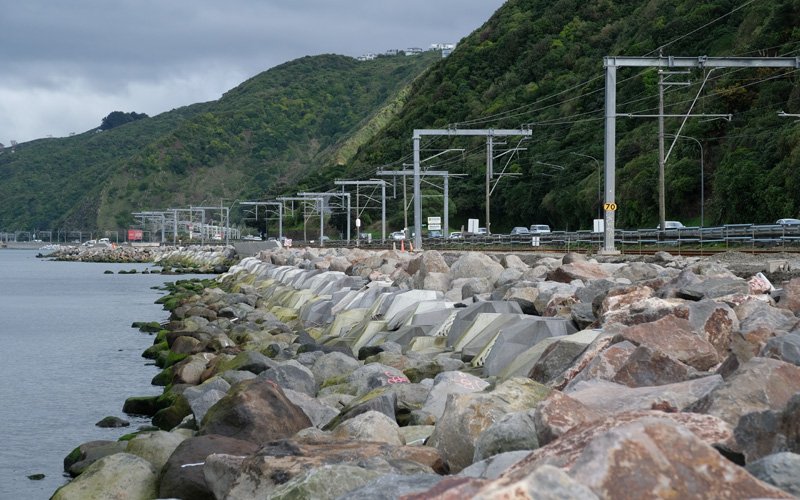
Building on a slim strip of coastline with a narrow worksite has created a logistical challenge unlike most infrastructure work.
“It’s a fairly linear job and that presents a lot of challenges,” says Brandon. “Getting equipment, machinery and construction materials where they need to be is a constantly evolving puzzle.”
“We initially needed access from three directions – from the north, the south, and, until recently, the barge in the middle. So getting that link up between the three areas was a big deal – it allowed us to stop using the barge, which served a great purpose but was very expensive.”
However, the bridge over the rail line at Ngā Ūranga will be completed soon, closing access for heavy equipment from the south and restricting site access to the north entrance only.
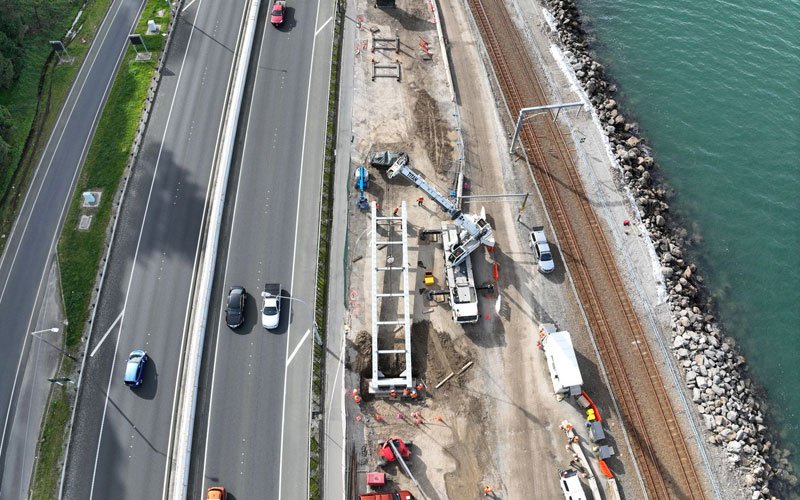
“This is where the linear nature of the project becomes even more of a challenge,” says Brandon. “Coming into the final stages we’ve still got revetments to finish, we’ve still got utilities to go in, we’ve still got paving works, fencing works, landscaping to do. All that takes a lot of material, so we’re planning where we’re going to be stockpiling those materials as much as possible before we lose the southern access.”
Innovation on the water’s edge
A signature feature of the project is the use of XBlocPlus® – pre-cast, interlocking concrete armour units designed and owned by Delta Marine Consultants (DMC), which are being used on the revetments.
“The XBlocs® are absolutely fantastic,” says Brandon. “They interlock, they’re incredibly strong, and they allowed us to build steeper revetments. That means a smaller environmental footprint – plus they look really cool.”
However, the uniform nature of standard XBlocPlus® did not align with the natural character of the landscape and environmental permits, so they were modified, changing the shape and colour to fit the local context, without increasing the cost. Taranaki Whānui artist Len Hetet worked alongside project designers, engineers and ecologists to mimic the high-energy rocky foreshore in a way that will encourage marine life to attach to the surface of the XBlocPlus®. Len gifted the name “Te Ripowai” to these enhancements, sharing the name and the following narrative:
"Te Ripowai speaks of the rippling water. It connects to our whakatauki [proverb] of guardianship"
Te Ati Awa tupua rau
Te Ati Awa of many phenomena
He auripo i te manga iti
A ripple in our small tributaries
He auripo i te manga nui
A ripple in our great waterways
He kaitiaki ki te whenua
A guardian on land
We must keep the ripples occurring – this speaks of the water living to which the land reciprocates. We as guardians must keep the ripples occurring – if we do not and the water becomes still then life will cease to exist."
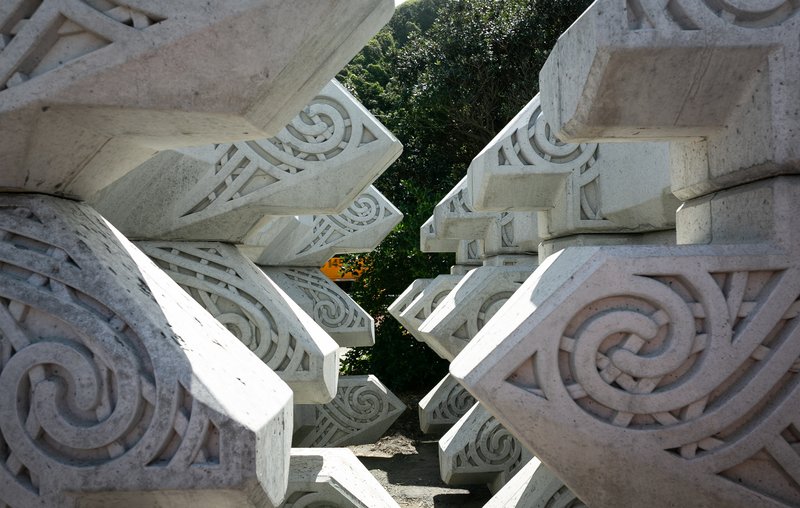
X-Blocs with cultural etchings designed by Mana Whenua Design Lead, Len Hetet.
But using the XBlocPlus® hasn’t been an entirely “off-the-shelf” solution.
“We have these culverts that are coming through from underneath the motorway and railway, and they need to pass through the XBlocs®,” says Brandon. “This is something that DMC haven’t really done before. They usually have the culverts protruding through the secondary armour behind the XBlocs®, but we needed to have them open to meet consent requirements.
“So the construction team, the engineer and the design team worked together to develop a pre-cast outlet structure that was designed to fit with the XBlocs®. It’s an absolutely fantastic solution that the whole team developed together.”
Building for the future
For Brandon, the project’s significance goes beyond engineering achievements.
“One of the things that I enjoy most about construction is actually being able to see what you’ve done and being able to say to your kids in 20 or 30 years, ‘I built that.’”
Originally from South Africa but now proud to call Wellington home, he sees the pathway as transformative.
“It’s something we really need – we’re taking a place that used to be unattractive and making it into a beautiful area. I think in a few years everyone will look back on this project and see that it was necessary and successful.”