
17 Dec 2025
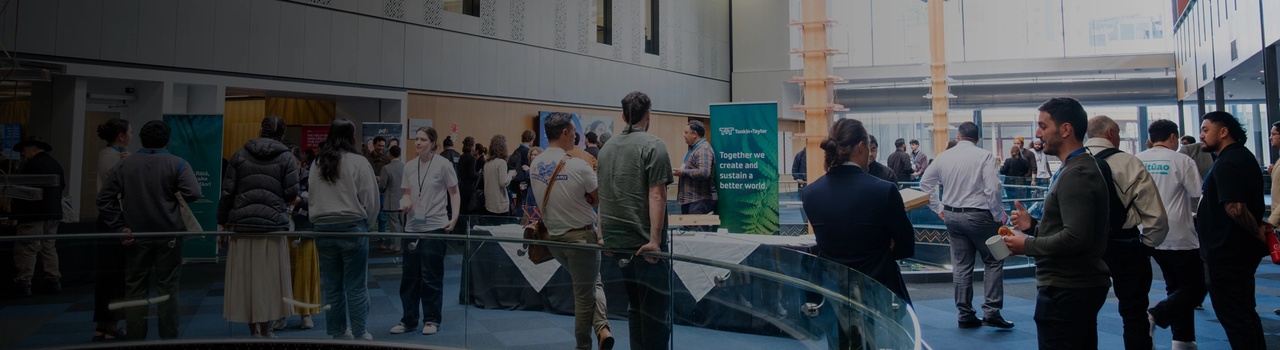
The Engineering New Zealand Te Ao Rangahau wānanga in September brought together the engineering profession to celebrate Māori engineering success, share challenges and shape the future of the profession in Aotearoa. Among them was 2025 ENVI Award winner and newly appointed Fellow, Stan Schwalger FEngNZ, whose leadership across three decades has transformed pathways for Māori and Pasifika engineers.
For Stan Schwalger FEngNZ, Project Controls Manager at McConnell Dowell, attending the wānanga He kura nā Rātā, He kura pūkaha, plus taking home the Community Impact ENVI Award, carried deep meaning.
“It’s humbling,” says Stan. “You don’t do the mahi for recognition, but it’s powerful to see the difference a community can make when it works together.”
In the early 1990s, while studying engineering at the University of Auckland, Stan noticed how few Māori and Pasifika students there were.
“We didn’t have much of a presence and sort of felt a little lost.”
With a handful of like-minded students, he founded the South Pacific Indigenous Engineering Students (SPIES) group, creating a supportive space for connection, mentorship and belonging.
“We just wanted to stop the cycle of students dropping out. It started small – pizza and conversation – but it became something bigger.”
SPIES evolved into a strong, nationally recognised network and later inspired the creation of the South Pacific Professional Engineering Excellence group (SPPEEx) to continue that support into professional life.
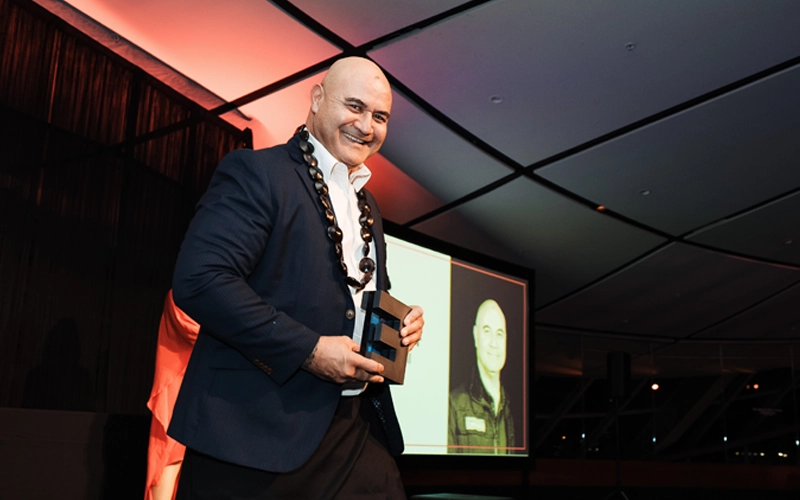
Photo: Smoke Photography Ltd
“SPIES students mentor high-schoolers, and professionals mentor the students. Each generation gives back to the next.”
Te Ao Rangahau Chief Executive Dr Richard Templer FEngNZ says Stan’s contribution reflects the best of the profession.
“Stan’s leadership and the recognition it has earned show that engineering isn’t just about the tangible outputs and systems, it’s about people. He has built a community that continues to lift others up decades later.”
That same spirit of connection was at the heart of He kura nā Rātā, He kura pūkaha, named in reference to the wisdom Rātā learned on his journey to save his people. Designed around three themes – past, present and future – the wānanga wove together stories of progress and purpose. The “past” sessions explored the origins of groups such as SPIES and the long journey toward representation and inclusion. The “present” sessions highlighted what it means to lead and collaborate with purpose in this moment. And the “future” sessions focused on visibility, leadership and the next generation of Māori engineers.
There’s a real sense of belonging now.
“The wānanga showed what’s possible when we combine wisdom, experience and forward thinking,” Richard says. “It was a reminder that collective success is what drives real change.”
For Stan, taking part in the wānanga’s exploration of the “past” theme was “a full-circle experience”.
“To see such a number of Māori and Pasifika engineers and supporters gathered together, it shows the profession has shifted and is shifting. There’s a real sense of belonging now.”
He credits the support of companies and clients who back initiatives like SPIES, SPPEEx and the wānanga itself.
“Nothing happens without that partnership,” he says.
“It takes the profession as a whole – consultants, contractors, educators and clients – to keep the progress moving forward.”
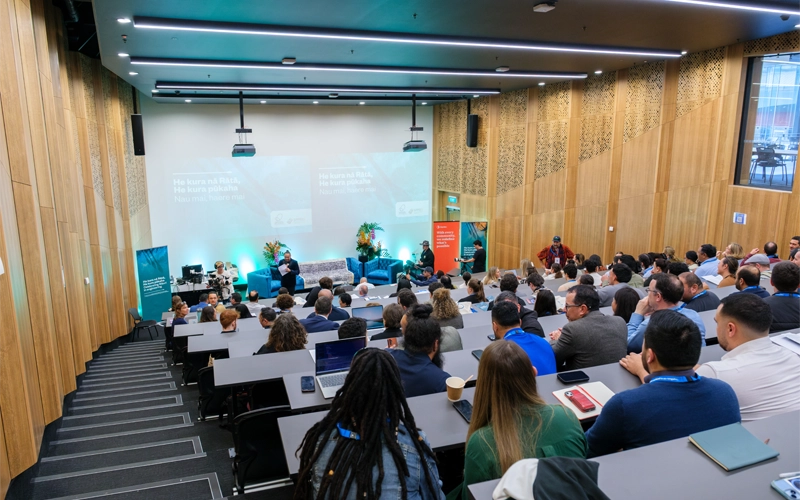
Photo: Tim Hamilton/VisionWorks Photography
Looking ahead, Stan believes the focus should be on the next stage of the pipeline: getting young people interested in STEM from an early age.
“By the time kids reach intermediate, it can be too late if they’ve already decided maths isn’t for them,” he says.
“We need to start earlier, in primary schools where we can catch them while they’re curious.”
Richard agrees, citing the Wonder Project as an example of how rangatahi can be inspired early to get involved in STEM. He adds that the wānanga’s success shows what can be achieved through shared purpose.
“Events like the wānanga prove that progress comes from unity,” Richard says.
Stan says we’ve come a long way, but the mahi continues.
“The more we work together for inclusion, the stronger engineering becomes.”
Will Pegler is Marketing and Communications Advisor at Te Ao Rangahau.
This article was first published in the December 2025 issue of EG magazine.